

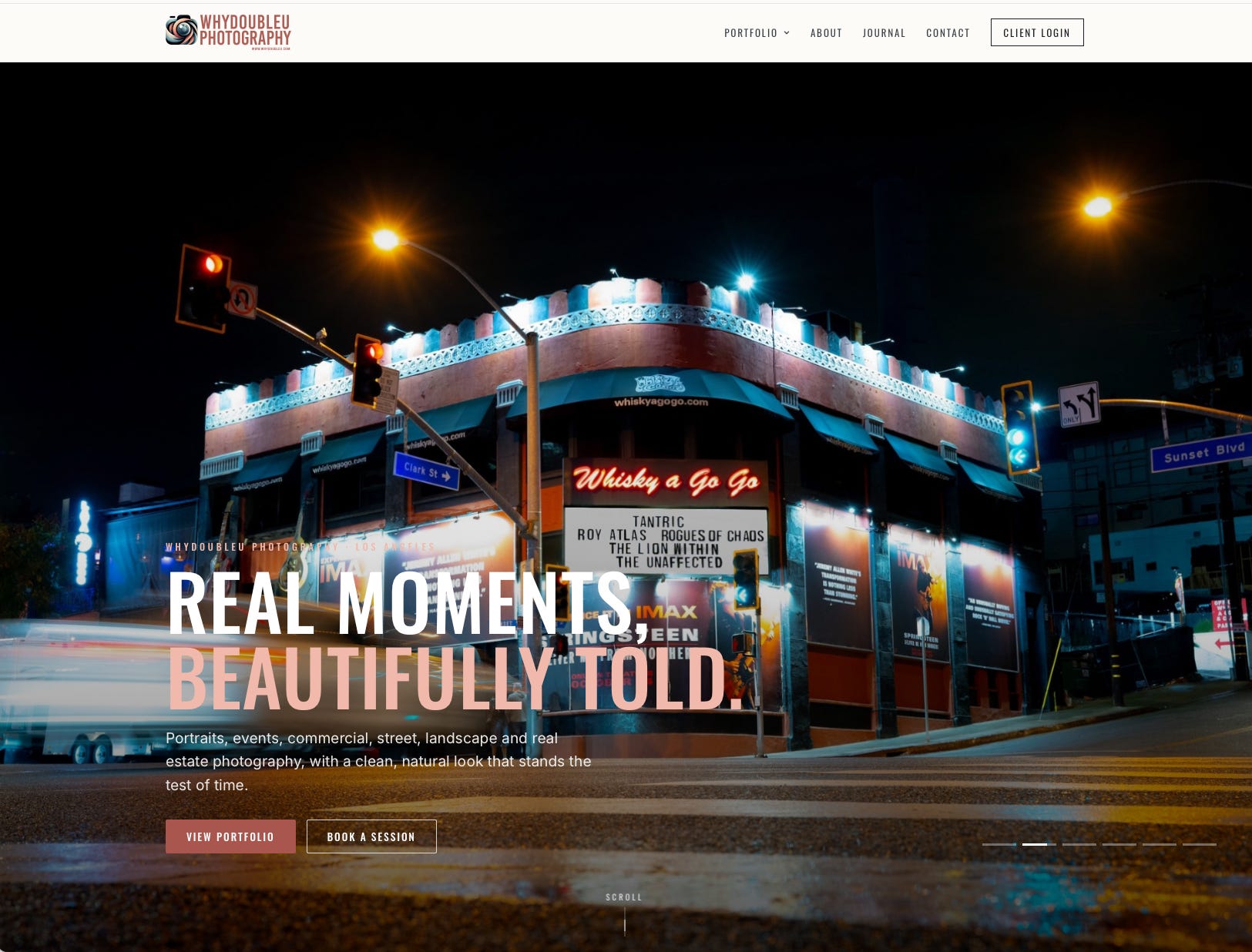
For years, whydoubleu.com ran on someone else’s template. It worked, mostly, but it was never quite mine. The layout, the gallery tools, the pricing on storage, all of it belonged to a service provider, and I just rented space inside it. I’d wanted to change that for a while. This fall, I finally did. I am still doing some adjustments so the site is at test.whydoubleu.com
Why rebuild
The old setup did the job of a photography website. Clients could see their photos, I could post my work, the lights stayed on. But it was a template wearing my logo, not a site built around how I actually work. Every change meant working inside someone else’s rules, and every gallery I uploaded added to a storage bill that kept creeping up. I wanted a site that looked like it belonged to a photographer with thirty years behind the lens, not one that looked like every other photographer’s site running the same theme.
What’s different now
I built the new site myself, using Claude Code to do the development work, with the main site running on an IONOS server and all the photo storage moved over to Cloudflare R2. That one change alone cut my storage costs by more than 75 percent, which on its own would have been worth doing. But the bigger shift is control. I’m not working inside a template anymore. I decide how the site looks, how it behaves, and how it grows.
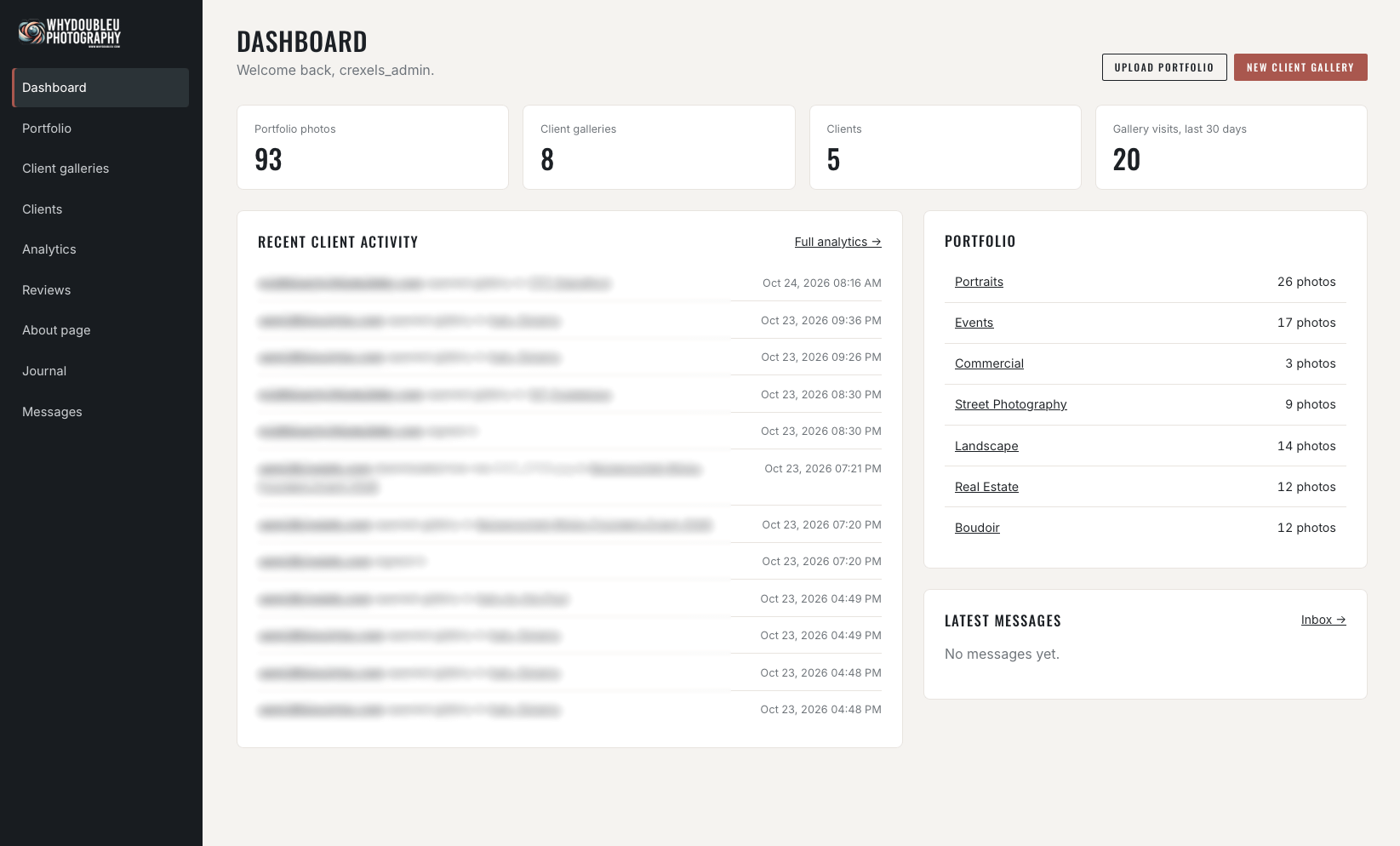
The backend is simpler too. Creating a new gallery and uploading photos into it now takes a fraction of the steps it used to. On the client side, each person I shoot for gets one place where every gallery I’ve ever sent them lives, instead of a pile of separate links scattered across old emails. From there they can share a gallery with anyone they want, and download a single photo or the whole set at once, whichever fits the moment.
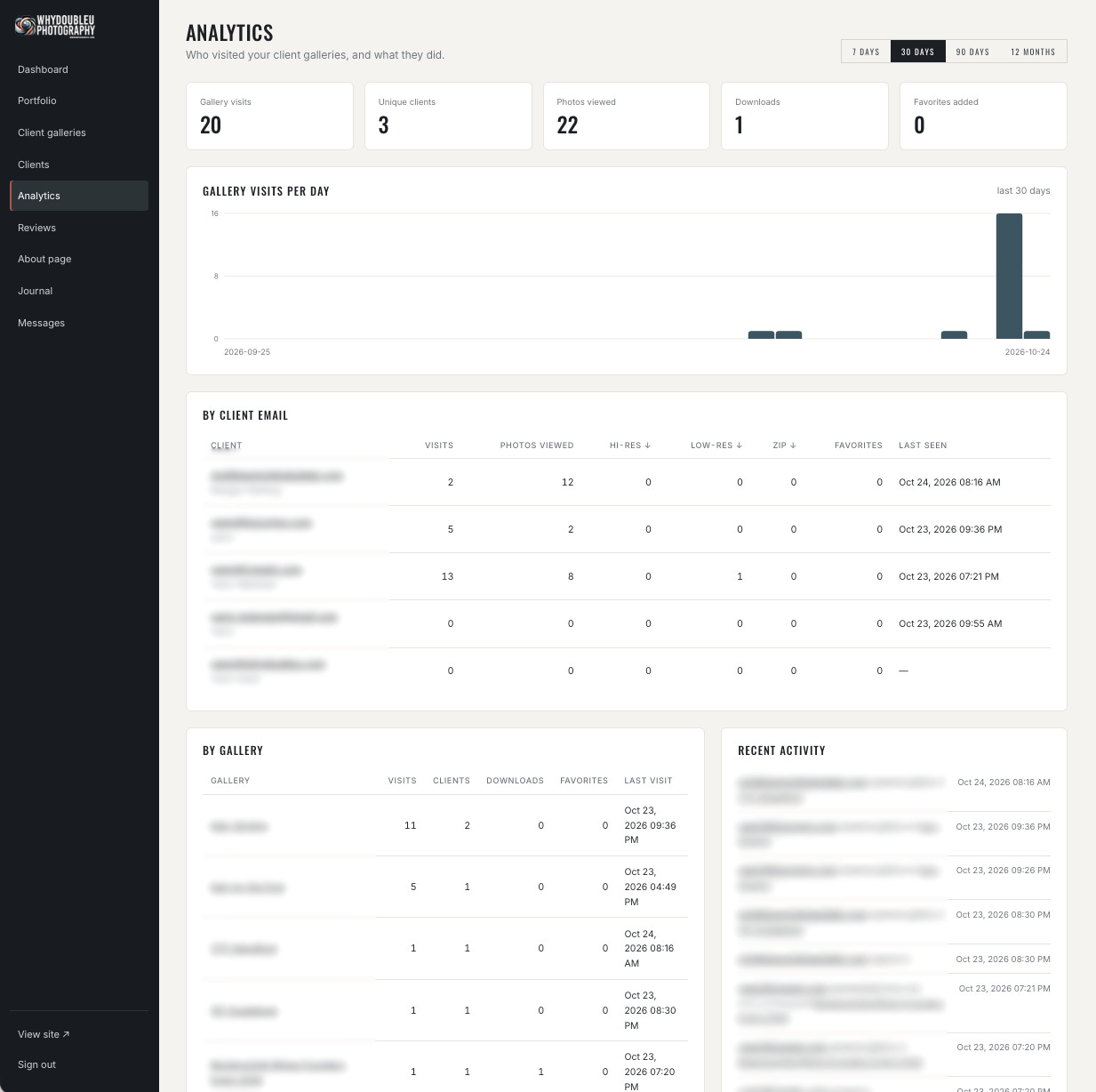
A few other things came together in the rebuild. My Google reviews pull directly from Google and show up right on the site, so they’re always current without me touching anything. This Substack updates the site automatically the moment I publish something new, so the writing and the photography finally live in one place instead of two. And on the back end, I can see real activity now: who’s logging in, what they’re viewing, what they’re downloading. That’s not something the old setup ever gave me.
Why it matters
None of this changes a single photograph I take. But it changes what happens after the shutter clicks, how a client finds their gallery, how easily they can share it with family, how clearly I can see whether the work is landing. A photography business runs on more than the photos, and for a long time the “more than” was running on someone else’s infrastructure. Owning it now, even the unglamorous parts like server choices and storage providers, feels like an extension of the same instinct that’s always driven the actual photography: wait for the thing to be right before you call it done.
I’m still cleaning things up before this goes fully live, and I’m still finding small ideas to fold in along the way. If there’s something you’d want to see from a photographer’s website, a feature, a gallery format, anything, I’d like to hear it.